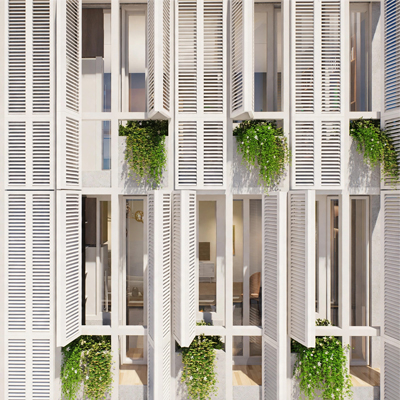
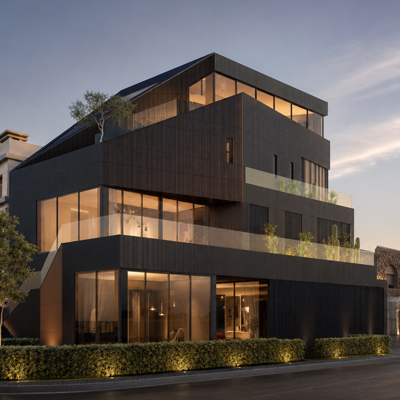
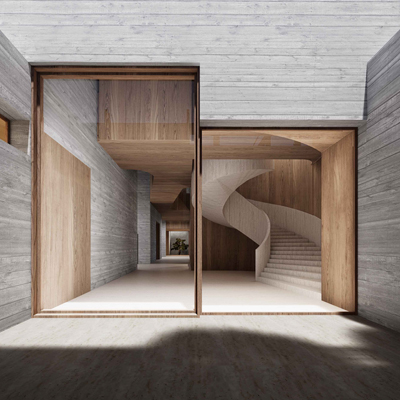
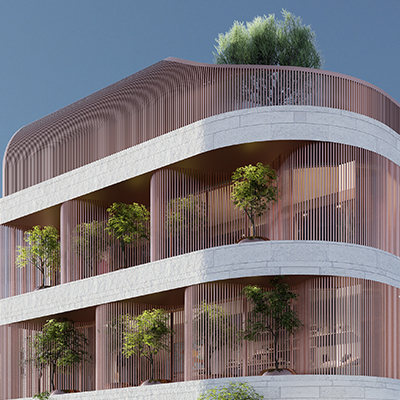
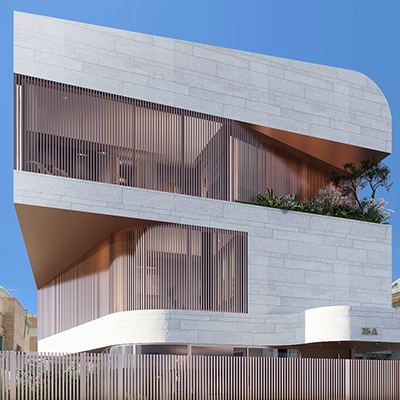
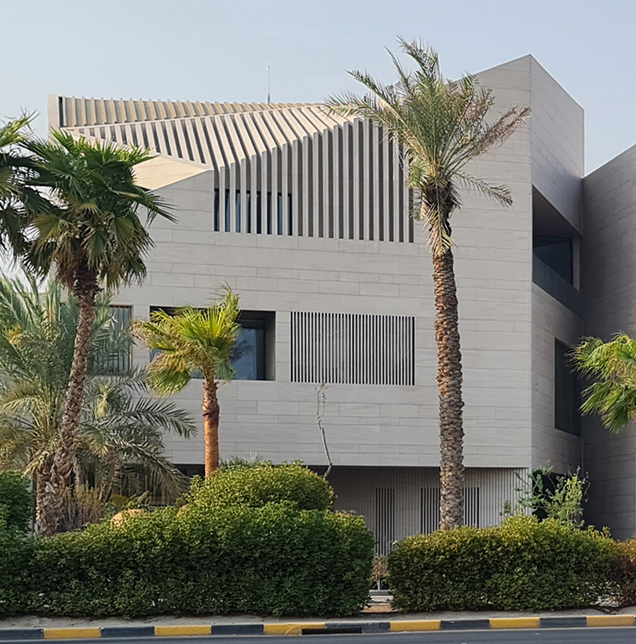
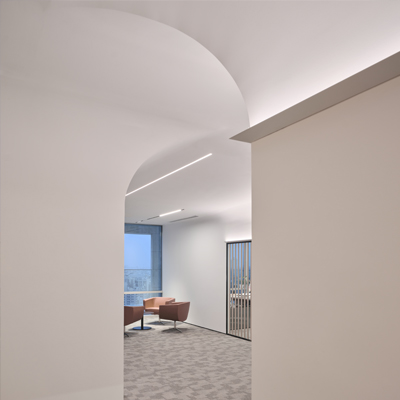
Design excellence is not limited to what we envision on paper. It is carried through every stage of construction, where architectural intent, technical precision, and craftsmanship come together.
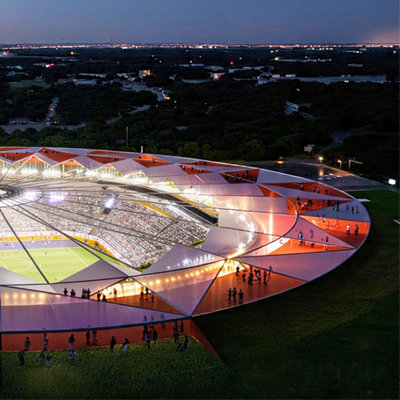
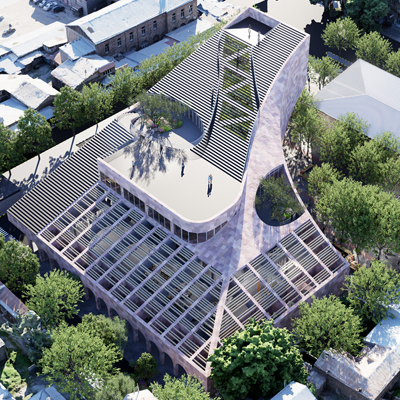
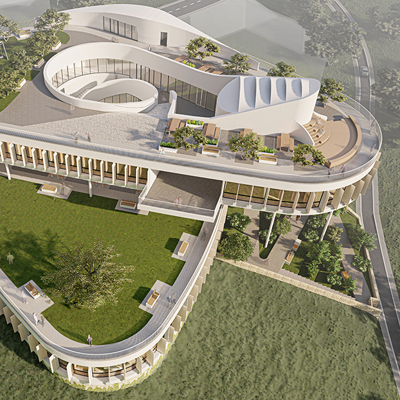
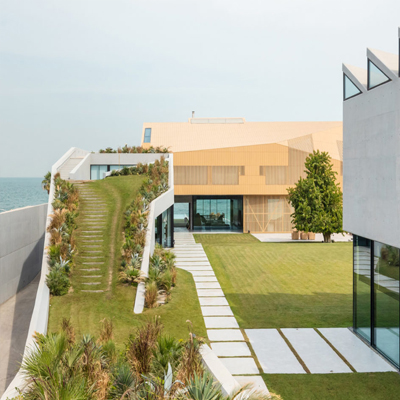
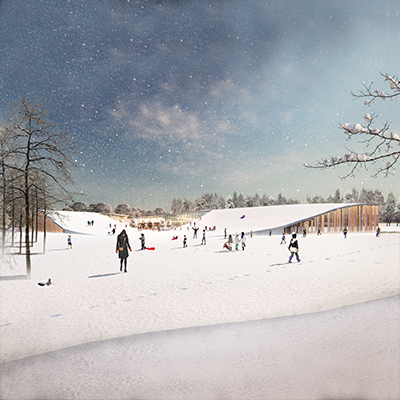
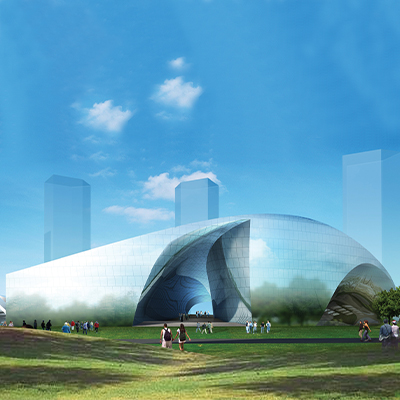
The stadium is conceived not as an object in the park, but as an extension of it. The landscape rises over the architecture, concealing the program beneath a continuous public topography.
Only precise incisions reveal the stadium within—allowing Maksimir Park to flow over, around and through it.
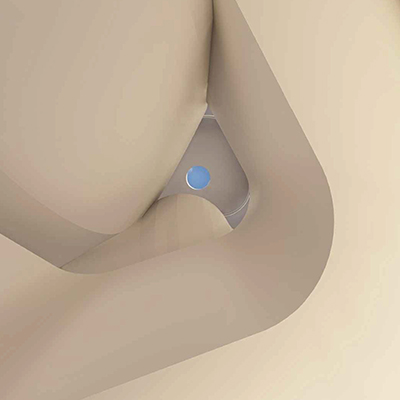
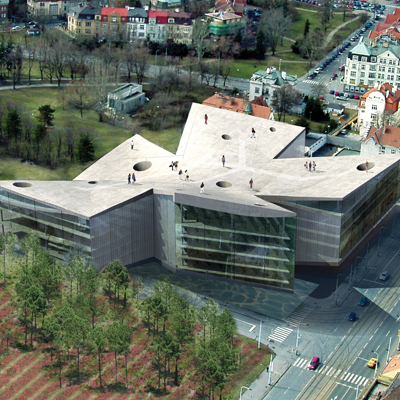
The raised landscape culminates in a continuous public rim surrounding the stadium. From this elevated promenade, a vast oculus opens onto the pitch more than thirty metres below, while a major incision opens northward, maintaining the stadium’s visual connection with Maksimir Park.
Rather than a monumental object, the stadium becomes an extension of Zagreb’s historic Maksimir Park—an inhabited landscape emerging from the terrain.
A major incision opens the stadium northward, visually preserving its relationship with the park. Above, the raised landscape becomes a publicly accessible rim overlooking a vast oculus, revealing the pitch more than thirty metres below.
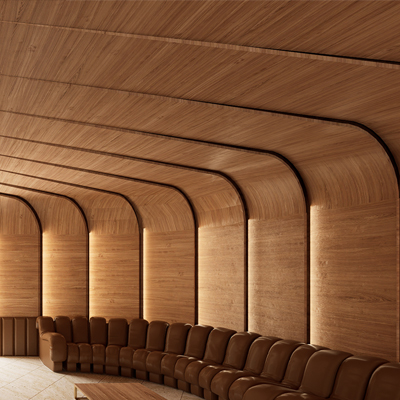
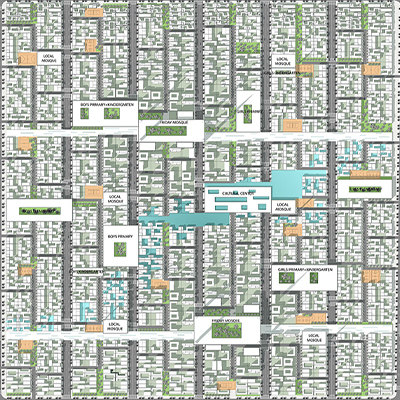
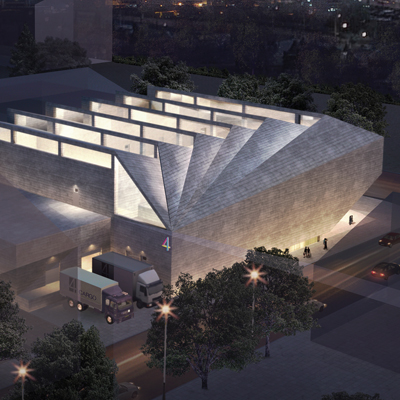
Between two ovals, a story turns upon itself. Light advances clockwise in measured pulses through sectional variations, tracing a timeline that revisits the same subject from different vantage points. As visitors orbit the space, the narrative unfolds not as a line, but as a constellation of perspectives woven together, suspending the path at a central theater that introduces the subject on a broad level before leading to ancillary corner pockets of focus, all seamlessly connected by movement, shadow, and time.
Recently, we were approached to reimagine a landmark building that once welcomed royalty, heads of state, and distinguished guests, showcasing the ambitions and achievements of a young oil nation.
Today, the building stands silent amid decades of local, regional, and global transformations. Yet within its walls lies a broader story waiting to be told—not merely about the institution it housed, but about the place, the people, and the era that shaped it. The building itself becomes a protagonist, carrying within its folds layers of memory, aspiration, and change.
We hope to see it soon open its doors as a museum, inviting visitors to read this story from multiple perspectives—through at least four distinct narrative lenses, each revealing a different chapter of its past, present, and future.
The sectional intelligence of Pearl Marzouq lies in its skip-stop organization. Courtyard-facing access galleries enter each duplex at mid-level, placing the living spaces below and the sleeping quarters above. Four access corridors consequently give rise to eight residential storeys, crowned by penthouses on a fifth access level. This compact arrangement effectively transformed circulation into density, allowing the complex to attain in the early 1970s a built-up area comparable to contemporary development envelopes. As a result, Pearl Marzouq avoided the obsolescence that befell many neighboring modern buildings, remaining a viable and complete urban artifact half a century later.
𝗔 𝗟𝗔𝗦𝗧 𝗟𝗢𝗢𝗞 This modern beacon was the first project we took on in Kuwait, where its retooling became only the beginning of bringing it back to life as architecture. The best intentions, however, must always go hand in hand with execution, operation, and stewardship to truly tell the legacy of a nation — especially in a youthful country where every project counts and inevitably becomes part of shaping the city and its people. Rather than constantly rewriting our present, it is equally important to articulate, preserve, and cherish our past with the same meticulousness. Architecture is not only about what we build next. It is also about what we choose to carry forward.
𝗧𝗛𝗘 𝗥𝗘𝗦𝗜𝗗𝗘𝗡𝗧𝗦’ 𝗗𝗘𝗖𝗞 While the central courtyard acted as a public interface between the city, the commercial plinth, and the residents, the pool deck was conceived as a quieter world — a space of serenity reserved exclusively for the inhabitants of the complex. Set against the backdrop of the articulated residential façade and the sea beyond, the pools became a place for retreat rather than spectacle. A side playground and a gym opening directly onto the deck complemented the outdoor living environment, allowing daily life to unfold between water, shade, and landscape. The intention was to create not simply an amenity, but a calm collective atmosphere suspended between the city and the Gulf.
The central garden was elevated using the debris generated from the new façade openings, allowing the courtyard to rise and align with the commercial plinth that now opens directly onto it.
The existing pool was filled with soil to allow the planting of mature trees, transforming what was once a fenced edge into a shaded inhabitable landscape.
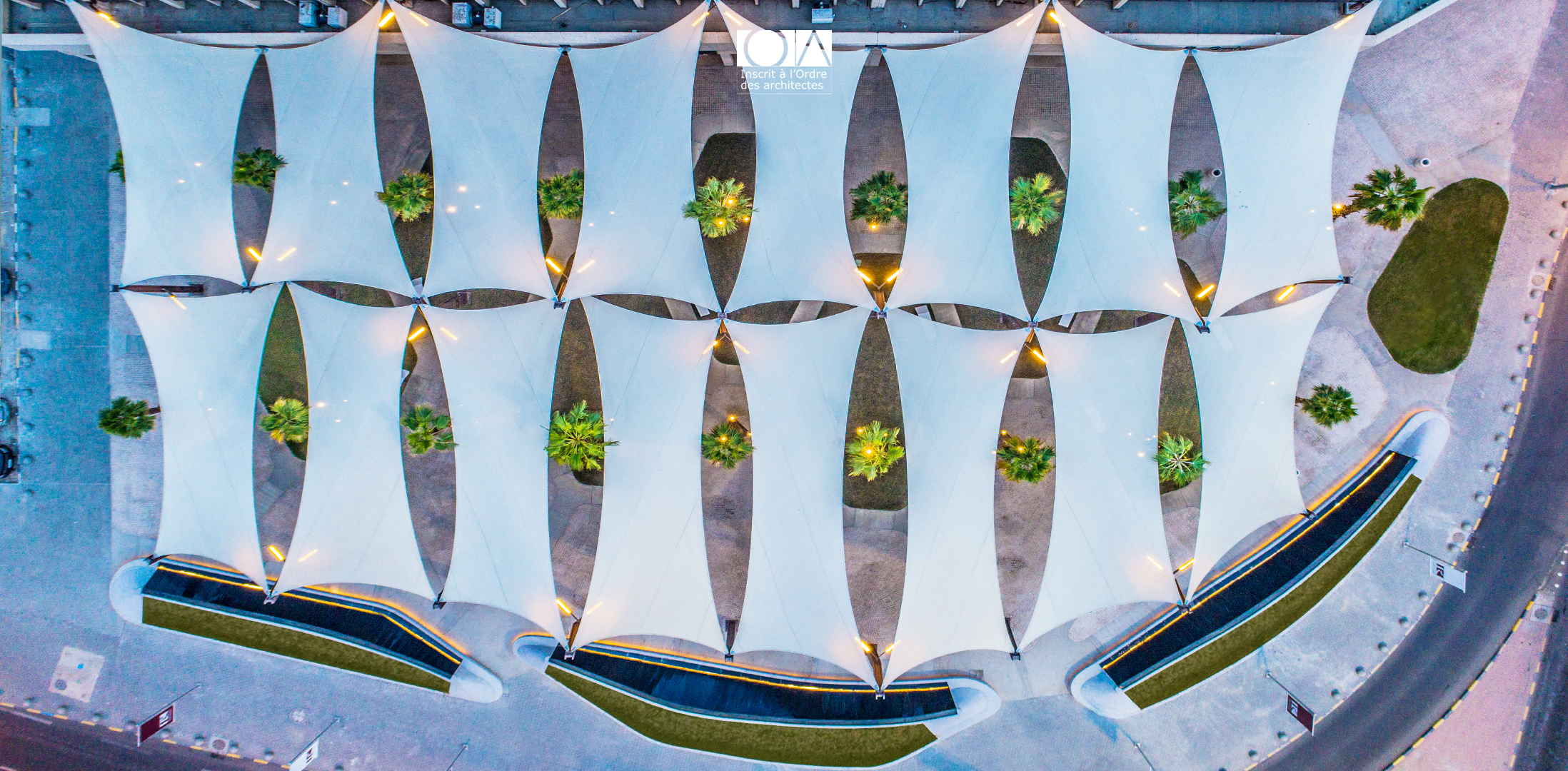
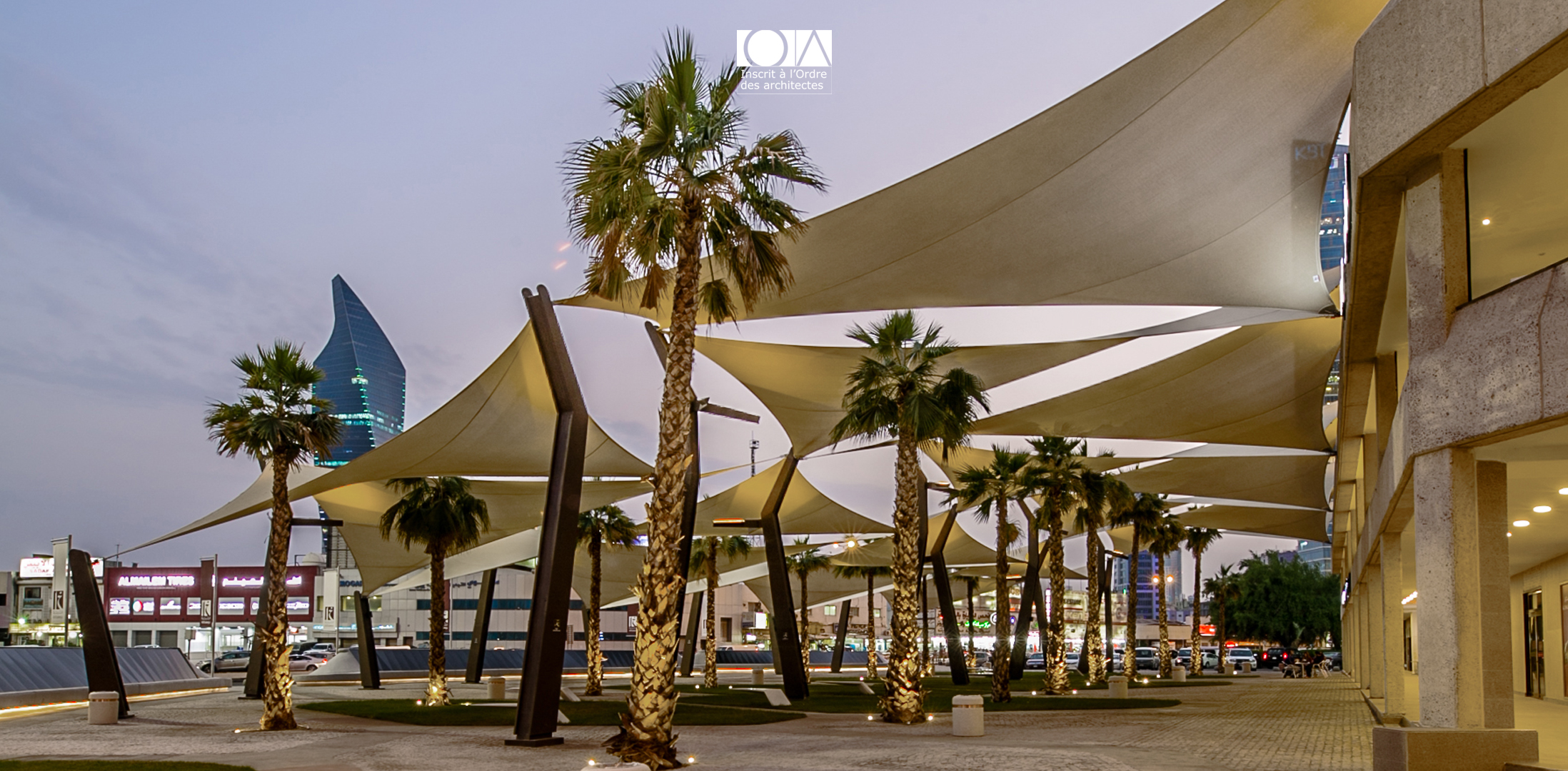
Custom lighting and misting networks complemented the stretched sails above, extending outdoor living in Kuwait as an alternative to the enclosed world of indoor malls.
Built-in concrete seating elements carved through the landscape modulate the playground and define places to gather, pause, and inhabit the courtyard.
Al-hosh was no longer leftover space between buildings. It became the climatic and social heart of the complex.
The central courtyard — al-hosh — was shaded by stretched sails suspended between the flanking blocks, their geometry carefully modulated with the existing structure so the building itself could support them.
More than a shading device, the sails transformed the courtyard into an inhabitable climatic void — filtering light, softening heat, and allowing the space between the buildings to become the social heart of the complex.
The intervention did not seek to impose a new order onto the building, but to work with what was already there, extending its logic rather than replacing it.
Between the sea, the stone, and the shade, the courtyard became once again a place to gather, pause, and live.
The typology of the central courtyard — the “hosh” — was reclaimed, not from the building’s past, but from what was already latent within its configuration.
What once stood as a commercial frontage backed by drivers’ rooms overlooking a fenced private pool was rethought as the main entrance pavilion to the complex. The central garden was elevated to align with the commercial plinth, allowing the ground floor to no longer address only the city outside, but also the courtyard within.
The commercial edge was therefore turned inward as much as outward, activating the central garden and transforming it from a residual void into the social heart of the complex.
Sometimes architecture is not about introducing a new language. It is about uncovering the one the building was quietly trying to speak all along.
Pinned to the tip of a peninsula, the building complex opens its chest to the sea — engulfed by it while simultaneously embracing within it a central courtyard.
Originally, the project extended itself into the water with its pool, reclaiming part of the coastline long before the public promenade later followed.
Yet with time, the question became not only how the building takes from the sea, but also how it gives back to the city.
In the renovation, the central courtyard — once private and introverted — was opened and publicized, transforming it into an urban breathing space connected once again to its surroundings.
Architecture along the waterfront should not stand as a barrier. It should mediate between the city, the sea, and the life unfolding between them.
More than four decades later, the sandstone was beginning to let go and fall away. Yet its timeless warmth remained — resting against the cerulean of the Arabian Gulf.
The question was never to overload the façade, nor to strip it from its identity.
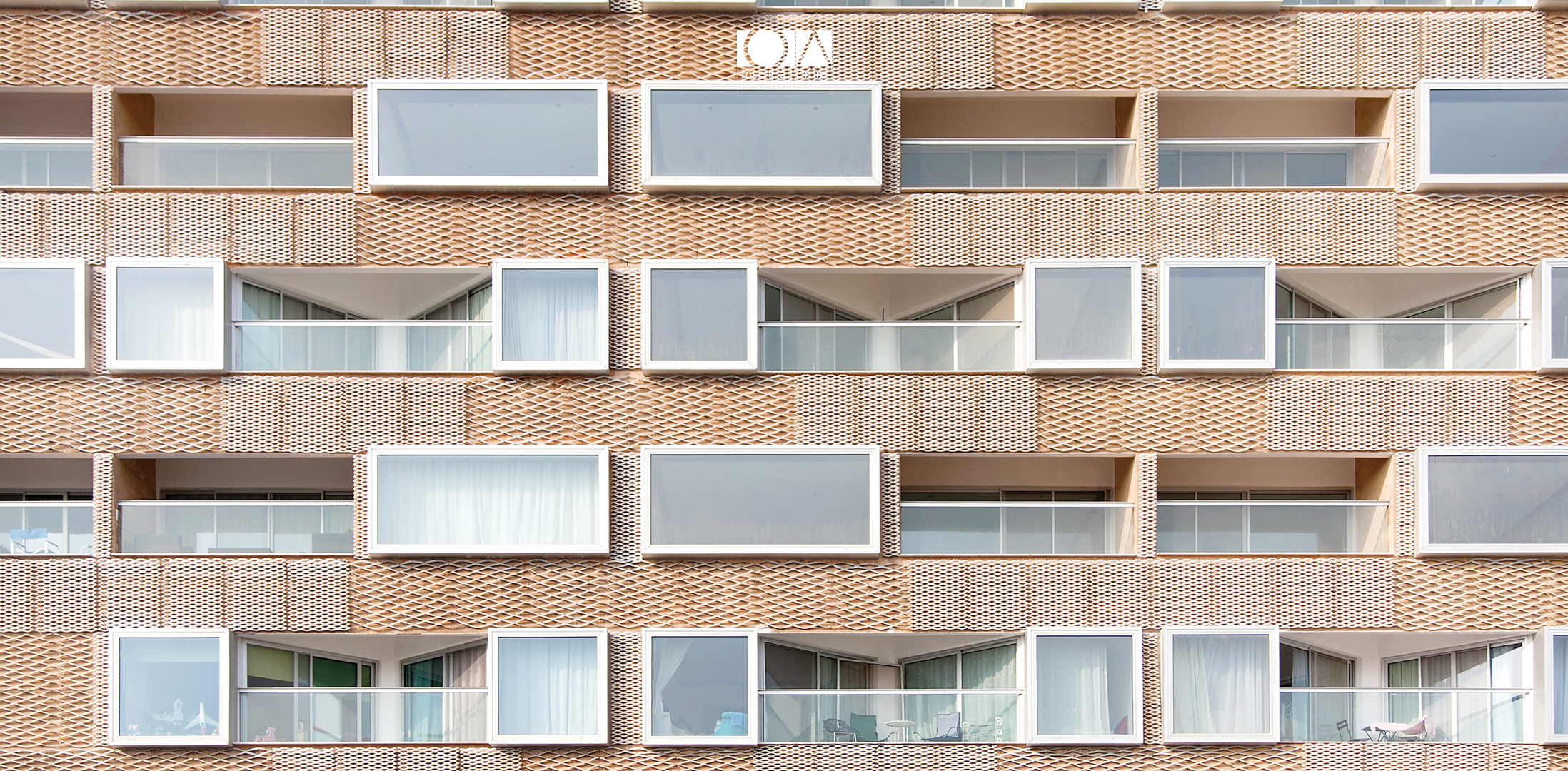
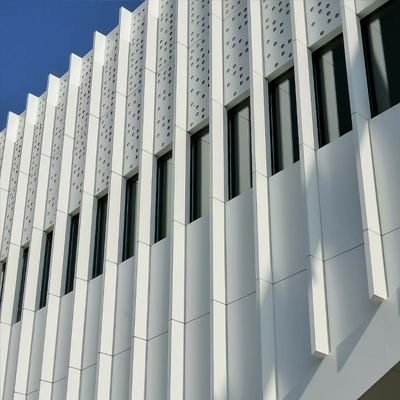
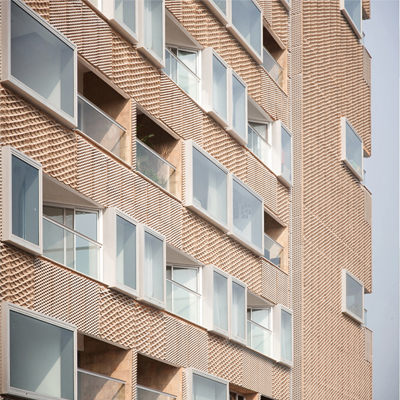
The intervention relied on the widest possible mesh apertures to continue revealing the stone beneath, while echoing the original anodized steel tones already present on the building. Smaller mesh apertures allowed the corners to turn softly without framing or visually hardening the mass. The overlay of the mesh simply rested over the stone skin, stabilizing it without overburdening the building.
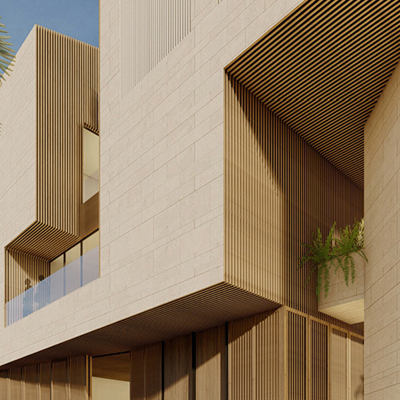
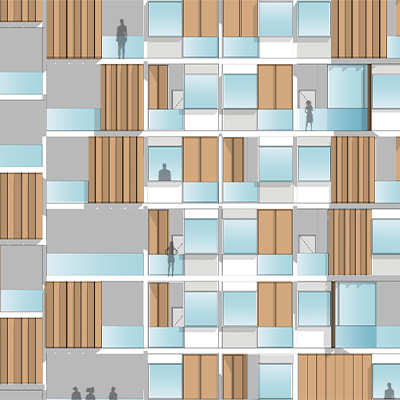
The newly introduced windows were intentionally popped outward instead of retreating inward like the original punched balconies. Not to imitate the old, nor compete with it, but to establish a quiet dialogue between what was there and what was added — another layer to the building without pretension.
Sometimes preservation is not about freezing a building in time. It is about allowing it to continue aging with dignity.
Since the day I stepped back into Kuwait, this building caught my attention during my early morning walks by the sea with my father — may his soul rest in peace. Docking by the waterfront, it carried something whimsical about it. Its alternating fenestration and articulated façade already hinted, back in the 70s, that behind it was not your typical apartment building.
The question was how to maintain this, amplify it, while optimizing the relationship with the sea. How to open the eye of the building to feel its surroundings.
You could already hear the hum of the sea at night, sitting on the balcony facing the pitch dark horizon while the waves whispered below, as if boarding a ship docked along the shore. So why not wake up to it in the morning?
Set on a one-of-a-kind peninsula where the city meets the sea without the burden of a highway, this residential retooling was less about adding space and more about restoring a forgotten relationship with the horizon.
The original apartment layout placed closets directly along the façade, turning the sea into something peripheral — present, yet disconnected from daily life. We relocated the storage spaces deeper into the plan, transforming them into a mediating walk-in closet between bedroom and bathroom, while carving out a V-balcony bay-window allowing the bedrooms to wake up to the sea.
No additional square meters were created. What changed was the experience of living, from waking up onwards.
Light, depth, perspective, and the constant presence of the horizon became part of the architecture once again.
I still remember one of the tenants when we explained the intervention saying: “But I already know the sea.”
Knowing the sea and living with it are two very different things.
PAD10 Architects + Designers’ finalist proposal for the Kuwait Foundation for the Advancement of Sciences (KFAS), links the Headquarters (HQ) and Convention Center (CC) along Kuwait’s waterfront. The project extends the existing promenade into a continuous “Science Mile,” connecting architecture, landscape, and public space.
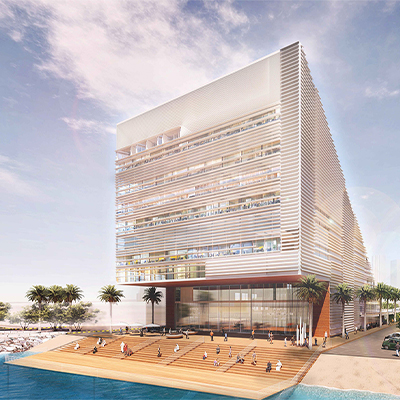
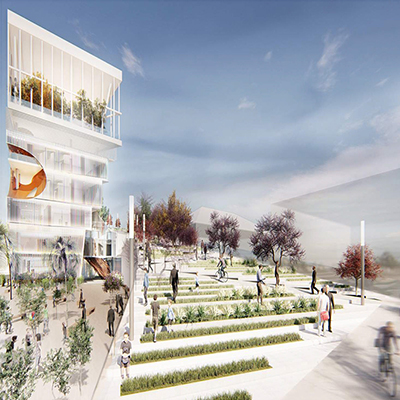
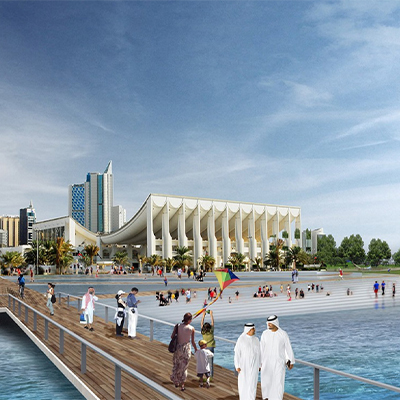
The Convention Center rises as a landscaped form at the peninsula edge, while the Headquarters anchors the marina promenade with transparent façades and shifting terraces. A continuous waterfront path links both buildings, creating a civic sequence that frames the marina and strengthens the relationship between city and sea.
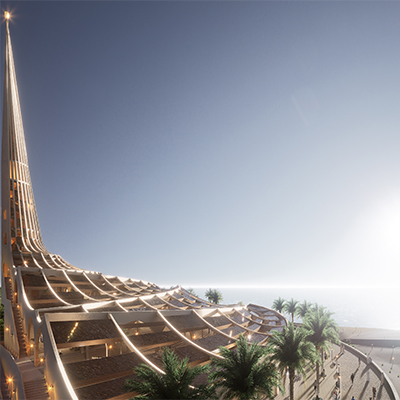
The KFAS Convention Center rises as an inhabitable landscape: its sloping green roof extends the promenade upward, offering elevated views back toward the city and outward to the Arabian Gulf. Programs such as the library, exhibition areas, cafés, and public gathering spaces open toward the sea, allowing cultural activity to spill outward into a stepped waterfront plaza.
PAD10 Architects’ proposal was selected as a finalist—ranked 5th out of 110 entries from 25 countries—in the anonymous two-stage international competition organized under the Union Internationale des Architectes (UIA).
PAD10 Architects’ finalist entry for the Kuwait Foundation for the Advancement of Sciences (KFAS) interlaces two new buildings—the Headquarters (HQ) and Convention Center (CC)—along Kuwait’s most prominent coastal stretch. Together with the existing Scientific Center promenade and a newly proposed elevated pedestrian bridge, the project extends the waterfront into an exploratory “Science Mile”: a continuous public sequence that links science, landscape, architecture, and the sea.
PAD10’s finalist proposal for the KFAS HQ & Convention Center interlaces two key buildings along Kuwait’s most prominent coastal stretch, extending the existing Scientific Center promenade into a continuous “Science Mile” culminating in a shaded public plaza beneath the Convention Center’s cantilever.
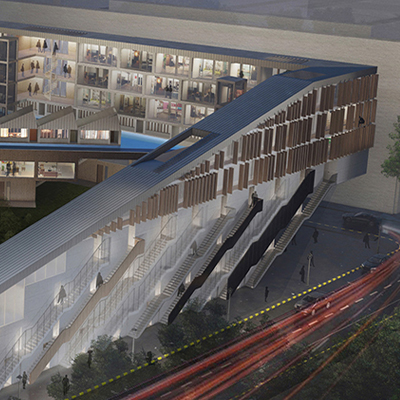
The HQ rises as an L-shaped volume, stepping from 3 to 8 floors—set back to preserve and frame views to and from Pearl Marzouq, while minimizing solar exposure and opening toward the sea. Its terraced façade forms an urban canopy, shaping shaded public edges and a vertical promenade that connects landscape, offices, and roof gardens.
Together, the HQ and Convention Center operate as a layered civic landscape—where architecture, promenade, and waterfront merge into a continuous public realm.
Finalist Award — ranked 5th out of 110 entries from 25 countries (Phase-EINS competition 2-stage competition).
In our award winning entry for KFAS new HQ, the L-shaped building steps back as it rises, allowing the existing promenade meadow to spill into the site—expanding the public open space while establishing a respectful setback from Pearl Marzouq. This gesture opens reciprocal views between both buildings toward the Arabian Sea.
Conceived as a landswell, the meadow integrates technical services and parking beneath, merging infrastructure with landscape and reinforcing the continuity of the public realm along the waterfront.
PAD10 Architects was selected as a finalist (5th out of 110 entries from 25 countries) in the international anonymous 2-stage competition for the KFAS HQ & Convention Center, organized by Phase EINS.